• Skip to main content

Selah

Creating moments for an INTENTIONAL PAUSE

  • ABOUT US
  • BLOG
    • Judaism
    • Oberammergau
    • Tour Prep
    • Tour Reflection
    • Tour Retrospective
  • TRAVEL & TOURS
  • TRAVEL ESSENTIALS
    • INSURANCE
    • E-SIMS
  • CONTACT US
  • SEED
  • Tour Prep

    Tour leader for Selah Sri Lanka tour – Expressions of Interest

    April 15, 2026 by Lisa Tarzia

    We are currently preparing for our 2027 Sri Lanka tour and are inviting expressions of interest for a very special role.

    We are looking for a Sri Lankan-born Christian pastor or ministry leader, now based in Australia, who can help bring depth, meaning,
    and spiritual insight to the journey.


    The Role

    Sri Lanka is a country where faith and culture are deeply intertwined. Our guests will encounter Buddhism, Hinduism, Islam, and Christianity throughout the journey—not just as beliefs, but as lived realities.

    While our professional local guide will manage logistics, history, and site commentary, the Selah Tour Leader will focus on:

    • Helping guests understand the religious and cultural landscape
    • Offering thoughtful explanation of Buddhism and Hinduism in Sri Lanka
    • Providing Christian perspective and reflection where appropriate
    • Leading optional devotions, discussion, and Q&A
    • Helping guests engage respectfully and meaningfully with what they see

    This is a relational and teaching role, not a logistical one.


    Who We Are Looking For

    We are seeking someone who is:

    • Sri Lankan-born (ideally raised in Sri Lanka)
    • Now living in Australia
    • A Christian pastor, minister, or mature ministry leader (Evangelical/Protestant)
    • Confident speaking to groups in a warm and engaging way
    • Knowledgeable about, or deeply respectful of, Buddhism and Hinduism in Sri Lanka

    Ideally, the right person will also have:

    • Cross-cultural or interfaith experience
    • A personal testimony of faith (especially powerful if coming from another religious background)
    • A pastoral heart and love for people

     The Opportunity

    This role involves travelling with a small group for 14 days throughout Sri Lanka, working alongside a local guide while providing spiritual and cultural interpretation.

    It is an opportunity to help travellers not only see Sri Lanka, but understand it more deeply—its people, its faiths, and its way of life.

    A highlight of the journey may include visits to sites such as Temple of the Sacred Tooth Relic, where cultural and spiritual insights can be shared in a meaningful way.


    Expression of Interest

    If this sounds like you—or someone you know—we would love to hear from you.

    Please complete our Expression of Interest form below:

    Tour Leader Expression of Interest - Sri Lanka

    Name
    Full time/Part time?
    Have you travelled to Sri Lanka before?
    Do you speak Sinhala or Tamil?

    We will carefully review all submissions and contact shortlisted candidates for further discussion.

    Filed Under: Tour Prep, Uncategorized

    Preparing your feet & body for multi-day walking tours

    April 13, 2026 by Lisa Tarzia

    Many people who book on a walking tour think that because they can walk around the Tan a couple of times, or go on a full day hike, that they will be OK.

    The challenge is when you are required to walk on consecutive days! If you are not well prepared your walking holiday can quickly become painful & unpleasant.

    Here are some tips for preparing your feet:

    1. Shoes 
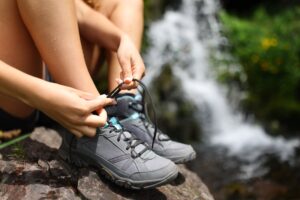
    Ensure you have shoes fitted for your foot type and the type of terrain you will be walking on. Every persons biomechanics are different and therefore so are your footwear needs. Having your feet analysed by a professional (do not buy online!) is a great way to ensure you have the right shoes from the beginning. It is ideal to have 2 pairs of shoes for your walking tour, especially if its wet and off road.
    We recommend good quality lightweight boots or trail shoes.

    2.Socks–are one of the best investments (after your shoes) that you can make. Ensure they are made with Coolmax or a similar moisture wicking technology (eg merino) to ensure water is drawn away from your skin. Have these come up above your ankle and have multiple pairs (best

    changed at regular intervals). Carry multiple pairs and change daily for comfort and protection.  Try some thin socks, thick socks, toe socks, two pairs of socks and ones made out of wool and bamboo.

    3.Toenails – cut your toenails short. If you are away for a period of time before commencing the walk, pack your nail clippers.

    4. Skin– You must prepare and care for your skin in the lead up to the tour. Any area of your skin that gets large buildups of callous (hard skin) is an area prone to friction and will most likely blister with large amounts of walking.

    ***  IT IS NOT RECOMMENDED FOR LONG DISTANCE WALKING THAT YOU ‘TOUGHEN UP YOUR FEET’ BY LEAVING AREAS OF CALLOUS/HARD SKIN. YOU WILL GET BLISTERS IN THESE AREAS.

    We recommend having this professionally removed by a podiatrist and to MOISTURISE  your entire feet DAILY to increase the elasticity of your skin. Eulactol heel balm is excellent for smoothing and softening feet.

    If you have had blisters before then you need to prepare that area of your skin for these areas to have potential reoccurence of blisters. If you get blisters on your toes, then toe socks can be helpful.

    Learn to tape your feet for blister prevention. It’s an amazing tool to have to reduce blisters (one of the major reasons people have to pull out of walking tours/events).

    4.Training– you will need to walk at least 75% of the distance of the distance you are partaking in. You will need to start at least 6months out from the tour and plan your training well. This allows your body to adapt to the change in loading and will ensure you enjoy the tour so much more with less chance of injuries. It is not enough to walk just 50% of the distance. Plan your training well to build up slowing and include a few bigger walks. Regular walks are better than intense weekend sessions. Do not rely only on weekend walking, as consecutive days of walking are key for multi-day trips.

    Training Routine Structure:
    • Initial Stage (Weeks 1-4): Begin with walking 5km, three times a week, ensuring you can comfortably reach 10km by the end of the first month.
    • Endurance Phase (Weeks 5-9): Increase to 15km+ and add a weekly long hike, progressively incorporating hilly or uneven terrain.
    • Backpack Training: Start with a light bag and gradually increase to the full weight you intend to carry, usually 4-7 kg, to build specific muscle stamina.
    • Full-Body Conditioning: Include exercises (see point 6 below) such as squats, lunges, calf raises for leg and core strength 2-3 times per week.

    5.Injury prevention– be it foot, leg, knee, hip or back pain …..any strength inefficiency in your body will raise it’s ugly head as you increase your training. Having a strength and stability program that is tailored to your tour will be of great benefit and help reduce over use injuries.

    Having your biomechanics, gait and walking assessed by a podiatrist can be very effective in identifying any issues that may cause problems along the way.

    6. Exercises – in addition to regular training walks these exercises will help you strengthen all the muscles necessary for a physically demanding hike (including your foot, leg and core muscles) and ensure your body is properly prepared for the challenge.

    These exercises may include:

    –         Plantar fascial release

    –         Calf raises

    –         Calf and hamstring stretches

    –         Intrinsic foot exercises

    –         Pelvic floor/core exercises

    –         Step-ups and squats 

    –         Shoulder rolls

    Filed Under: Tour Prep, Travel Tips, Uncategorized

    Before You Cancel: Why Patience Could Save You Thousands

    March 3, 2026 by Lisa Tarzia

    When unrest unfolds in the Middle East, our phones ring.

    People are understandably anxious. They want to cancel. They want to change. They want certainty.

    And what everyone really wants is a crystal ball.

    But here’s the truth: in moments like this, the timing of your decision matters just as much as the decision itself.


    Panic Is Understandable — But It Can Be Expensive

    When headlines are intense and airspace is disrupted, it feels safer to “just cancel.”

    However, cancelling too quickly can trigger:

    • Airline cancellation penalties

    • Loss of deposits

    • Non-refundable supplier charges

    • Insurance complications

    In many cases, acting immediately can cost you significantly more than waiting a few days.


    How Airlines Usually Respond in Crises

    What many travellers don’t realise is that airlines typically operate from a place of goodwill during major events — whether it’s conflict, natural disasters, or unexpected airspace closures.

    Once the scope of disruption becomes clear, airlines often release special advisories such as:

    • Free date changes

    • Free rerouting

    • Travel credits

    • Full refunds

    For example, airlines have previously issued travel waivers allowing free cancellations or amendments for bookings impacted within specific travel windows.

    But here’s the key:

    Those options are only available once the airline formally announces them.

    If you cancel before an advisory is issued, standard penalties may apply.


    The First Few Days Are Usually the Noisiest

    Immediately after a significant event:

    • Airspace may temporarily close

    • Airlines assess operational impact

    • Governments issue precautionary advisories

    • Media coverage intensifies

    But airlines need time to evaluate:

    • How long disruption will last

    • Which routes are affected

    • Whether schedules can be adjusted

    That assessment period is often when travellers feel the most anxious — yet it’s also when waiting is most important.


    Why Waiting Protects You

    If you hold your booking while airlines assess:

    • You preserve eligibility for goodwill waivers

    • You avoid unnecessary cancellation penalties

    • You keep your options open

    • You allow re-routing solutions to emerge

    If you cancel prematurely because of fear, you may lock in losses that could have been avoided.

    Patience is often financially strategic.


    What We Are Actively Doing Behind the Scenes

    While you’re watching the news, we are:

    • Monitoring airline advisories daily

    • Watching for waiver announcements

    • Tracking airspace updates

    • Communicating directly with suppliers

    • Protecting your position

    Our role is to advise when action becomes necessary — not when emotions are highest.


    When Is It Time to Act?

    There are moments when change is appropriate:

    • If an airline formally suspends your route

    • If government advice escalates significantly

    • If your departure is imminent and disruption remains unresolved

    But those decisions should be made based on official advisories — not speculation.


    The Bottom Line

    We understand the fear. We understand the uncertainty.

    But cancelling early rarely brings peace of mind — and often creates unnecessary financial loss.

    Top tier airlines typically provide flexibility once they’ve assessed the situation.

    The wisest course of action in the early stages of disruption is usually:

    Pause. Wait. Let the official advisories be released.

    We don’t have a crystal ball.

    But we do have experience navigating these situations — and patience, in these moments, often protects both your plans and your wallet.

    And a faithful God we can trust in.

    Filed Under: Travel Tips

    Do I Need a British Passport to Enter the UK?

    January 29, 2026 by Lisa Tarzia

    Do I Need a British Passport to Enter the UK? Clearing Up the Confusion for Australian Travellers

     Over the past few weeks, there’s been widespread confusion following announcements from the UK government about passport requirements for entering the United Kingdom.

    We’ve seen headlines suggesting that anyone born in the UK or with British parents must travel on a British passport — and some Australians have even been warned they could be denied boarding.

    So what’s actually changed? And who does this really affect?

    Let’s unpack it clearly — so your UK trip doesn’t come unstuck before it even begins.

    The Key Change (In Plain English)

    The confusion stems from the UK’s rollout of its Electronic Travel Authorisation (ETA) system.

    From 2025–2026, travellers who don’t need a visa (including Australians) must obtain an ETA before travelling to the UK.

    However:

    👉 British and Irish citizens are NOT eligible for an ETA.

    This is where the problem begins for dual citizens.

    Who Is Affected by the New Rule?

    ✅ Dual British–Australian Citizens

    If you are a British citizen, even if you also hold Australian citizenship, the UK expects you to prove your British status when entering the UK.

    From 2026, this means you must enter the UK using one of the following:

    • a valid British passport, or
    • a valid Irish passport, or
    • a foreign passport (e.g. Australian) with a Certificate of Entitlement confirming your British citizenship.

    Why?
    Because as a British citizen, you cannot apply for an ETA, and airlines generally won’t let you board without either:

    • a British passport, or
    • proof of entitlement to enter the UK without an ETA.

    This is what has led to travellers being stopped at check-in — not a sudden change in citizenship law, but a clash between citizenship status and the ETA system.

    Who Is Not Affected?

    🇦🇺 Australian Citizens (Only)

    If you are:

    • an Australian citizen, and
    • travelling on an Australian passport, and
    • not a British citizen

    👉 Nothing has changed for you, apart from needing an ETA.

    You do not need a British passport simply because:

    • you were born in the UK, or
    • one or both of your parents were born in the UK.

    Being eligible for British citizenship is not the same thing as being a British citizen.

    Unless you have formally registered as a British citizen and hold proof of that status, the UK treats you as an Australian visitor.


    ✔️ Checklist: Am I Formally a British Citizen?

    Tick YES or NO to each question:

    🔹 1. Have you ever held a British passport?

    ☐ Yes → You are a British citizen
    ☐ No → Go to Question 2

    🔹 2. Have you ever been issued a British citizenship certificate?

    (e.g. Certificate of Registration or Naturalisation)

    ☐ Yes → You are a British citizen
    ☐ No → Go to Question 3

    🔹 3. Were you born in the UK before 1 January 1983?

    ☐ Yes → You are likely a British citizen (confirm if unsure)
    ☐ No → Go to Question 4

    🔹 4. Were you born in the UK after 1 January 1983, and at least one parent was:

    • a British citizen or
    • permanently settled in the UK at the time of your birth?

    ☐ Yes → You may be a British citizen (check documentation)
    ☐ No → Go to Question 5

    🔹 5. Were you born outside the UK to a British parent?

    ☐ Yes → You may be eligible for British citizenship
    ☐ No → Go to Question 6

    ⚠️ Important: Eligibility does not mean you are already a British citizen. You must have formally registered to be one.

    🔹 6. Have you ever formally applied for or registered British citizenship?

    ☐ Yes → You are a British citizen
    ☐ No → You are not formally a British citizen

    🧠 Final Check: What Does This Mean for Travel?

    ✔ Mostly NO answers?

    You are not formally a British citizen
    ➡ Travel on your Australian passport
    ➡ Apply for a UK ETA
    ➡ No British passport required

    ✔ Any clear YES answers (passport or certificate)?

    You are a British citizen
    ➡ Enter the UK using a British passport, or
    ➡ Obtain a Certificate of Entitlement for your Australian passport
    ➡ You cannot use an ETA

    ✈️ One Last Tip for Travellers

    If you’ve never held a British passport or citizenship certificate, the UK does not expect you to magically produce one at the airport — even if you were born in the UK or have British parents.

    When in doubt, clarify early. Airlines decide at check-in, not border control.


    References

    https://www.gov.uk/check-british-citizenship

    Check if you’re a British citizen: Overview – GOV.UK

    Check if you’re automatically a British citizen – it depends on where and when you were born and your parents’ immigration status.

    https://www.gov.uk/guidance/electronic-travel-authorisation-eta-guide-for-dual-citizens?utm_source=chatgpt.com

    ETA guide for dual citizens

    https://www.smartraveller.gov.au/destinations/europe/united-kingdom

    DFAT Smart Traveller United Kingdom

    Filed Under: Tour Prep, Travel Tips

    Is It Safe to Travel to Israel & Palestine?

    January 12, 2026 by Lisa Tarzia

    It is one of the first questions we are asked—sometimes quietly, sometimes bluntly:

    “Is it safe to travel to Israel & Palestine?”

    Since the end of the war, enquiries and bookings for Israel have increased significantly. For many Christians, the longing to walk where Jesus walked and to read Scripture in the land where it was written is deeply compelling. At the same time, hesitation is understandable.

    Rather than offering a simple yes or no, it’s worth asking a more helpful question first:

    What do we actually mean when we say “safe”?

    How Do We Define “Safe”?

    Safety is often spoken about as though it is absolute—something a destination either is or isn’t. In reality, safety is highly subjective.

    For some people, safety is about political stability.
    For others, it’s about crime rates, healthcare systems, or reliable infrastructure.
    And for many, safety is emotional: How will I feel being there? Will I be anxious? Will my family be worried?

    Our perceptions of safety are shaped by our personal experiences, our tolerance for uncertainty, and the stories we hear—particularly through the media.

    No Destination Is Completely Risk-Free

    It’s also important to acknowledge that no destination is ever completely risk-free.

    Cities across Europe, the UK, and the United States—places many of us visit without hesitation—experience crime, civil unrest, and occasional acts of violence. Yet we rarely ask whether those destinations are “safe” in quite the same way.

    Israel, because of its history and its prominence in global news, is often held to a different standard.

    Better Questions to Ask Before You Travel

    Rather than asking “Is Israel safe?”, it can be more helpful to consider a series of practical questions:

    What is the current situation on the ground?
    Are borders open? Are airlines operating? Is daily life functioning normally? These indicators often tell us more than headlines.

    Where will I be travelling?
    Most Christian itineraries focus on areas such as Jerusalem, Galilee, the Dead Sea, and the coastal regions—areas with well-established tourism infrastructure and strong security presence.
    We do not visit Gaza ever.

    Who am I travelling with?
    Travelling independently is very different from travelling with an experienced tour operator who understands the region, monitors conditions closely, and adapts plans when required.

    How do I personally assess risk?
    Some travellers find visible security unsettling; others find it reassuring. Some thrive on certainty, others are comfortable with unpredictability. There is no “right” response—only an honest one.

    Experience, Planning, and Responsibility

    We have been operating tours to Israel and the surrounding region for over 20 years. During that time, we have navigated seasons of calm and seasons of uncertainty.

    Behind every tour is a comprehensive risk management plan—something most travellers never see, but which shapes every decision we make. This includes ongoing monitoring of local conditions, close relationships with trusted partners on the ground, and clear protocols for responding to change.

    If a situation were to escalate, we would not hesitate to amend itineraries, postpone departures, or cancel a tour altogether. Safety—physical, emotional, and pastoral—is always our first priority.

    Faith, Fear, and Discernment

    For many Christian travellers, the question of safety sits at the intersection of faith and wisdom.

    Travelling to Israel is not about ignoring reality or being reckless. Nor is it about being ruled by fear. Scripture invites us to seek discernment, wise counsel, and peace as we make decisions.

    Interestingly, many travellers report that once they arrive in Israel, the anxiety they felt beforehand gives way to a profound sense of calm and focus—often describing the experience as grounding, moving, and deeply faith-affirming.

    So, Is It Safe to Travel to Israel?

    The most honest answer is this:

    Israel is as safe as many destinations people travel to regularly—provided travel is well-planned, responsibly guided, and thoughtfully considered.

    Whether it feels safe for you depends on how you define safety, your comfort levels, and how you choose to travel.

    Our role is not to convince anyone, but to walk alongside you with transparency, experience, and care—so you can make an informed and prayerful decision.

    If you’re considering travelling to Israel and would like to talk through your questions or concerns, we’re always happy to have that conversation.

    Considering a trip to Israel but still have questions?
    We understand that deciding to travel—especially to this region—is not something to rush. If you’d like to talk through current conditions, our safety protocols, or whether one of our upcoming tours is right for you, we’d love to help.

    With over 20 years’ experience leading Christian tours to Israel and the Middle East, our role is to provide clarity, wisdom, and care—so you can make an informed, prayerful decision.

    Get in touch with us to discuss upcoming Israel tours or to speak with our team.
    No pressure. Just honest conversation and trusted guidance.

    Check out our Holy Land Tours on offer.

    Filed Under: Travel Tips Tagged With: israel, safety

    Review of the Emirates Premium Economy Cabin

    December 3, 2025 by Lisa Tarzia

    I recently flew Emirates Premium Economy on the A380 from Melbourne to Dubai and came away impressed: the cabin is clearly aimed at travellers — often middle-aged (55+) — who want a clear comfort upgrade over economy without splurging on business class. You get the feeling of a calmer, more spacious experience while still staying in a mid-tier price bracket. The cabin layout (2-4-2) and cream leather seats create an air of quiet luxury.

    Seat comfort & space
    The seats are noticeably roomier than economy: about 19.5-inch seat width and a pitch that reviewers report around 38–40 inches, with around 8 inches of recline plus a calf rest and pop-out footrest. That extra legroom and the foot/calf rests make a long flight genuinely more comfortable and give you space to stretch and walk without feeling like you’re in a cramped premium economy. In-seat power (USB-A/C and AC) and a large personal screen with Emirates’ ICE entertainment are standard, which keeps devices charged and the hours pleasant.

    Service, pre-flight and boarding

    Priority check-in and boarding are part of the experience, which helps avoid the usual pre-flight scramble. You’re also offered a pre-takeoff non-alcoholic welcome drink and a hot towel before meal service — nice touches that make you feel looked after from the moment you step on board. Reviewers consistently mention attentive, unobtrusive service in the cabin.

    Meals

    An extensive menu with proper cutlery, crockery and glassware. Sparkling wine (not on offer on economy free of charge) and a higher standard of drinks and meals overall.

    Extras & practicalities

    Emirates provides amenity kits, pillows/blanket and dedicated restrooms for the cabin on some aircraft, and the overall finish is a step up from economy. Do note there’s no business-class lounge access included with the fare, and you won’t get the on-board bar that’s reserved for business/first passengers — but the premium economy perks (more baggage allowance on some fares, priority handling, better meals) still make it a strong value for travellers who want comfort without the full business-class price.

    How much more?

    How much more you pay for Emirates Premium Economy (vs their regular Economy class) really depends on your route, dates and how early you book — but there are some general guidelines:

    • Typical Premium Economy fares tend to be ≈ 30–70% more than economy fares.

    • On some long-haul routes (for example Australia ⇄ Dubai) recent comparisons show a round-trip Premium Economy fare might be roughly AU $2,500–$2,800 more than the corresponding economy fare.

    • For long-haul international flights (e.g. Europe or Middle East connections), many travellers report Premium Economy costing roughly double economy — though actual price differences vary a lot depending on season, demand and when you book.

    Pros

    • Clear step up in comfort: much more legroom and better recline than economy.

    • Priority check-in/boarding and more attentive service.

    • Good in-seat amenities: power ports, large screen, calf/foot rest, amenity kit.

    Cons

    • Not a substitute for business class: no lounge access, no onboard bar access.

    • Cabin still has more passengers than business, so it’s not as quiet as a business cabin on long sectors. (Subjective — depends on the flight.)

    • Availability varies by route and aircraft while Emirates continues rolling the product out.

    Verdict
    If you’re in that 55+ demographic (or anyone who wants to arrive less knackered than economy but can’t justify business fares), Emirates Premium Economy offers one of the better mid-tier experiences out there. It’s particularly good for long daytime or overnight flights where legroom, a real foot/calf rest and the ability to move around make a big difference. I’d recommend it as a practical, comfortable upgrade — just don’t expect full business-class extras. If anything, it reminds me of the old business class before the introduction of the flat bed.

    References in addition to our own review:

    Penyblog+2Eat drink and be Kerry

    Emirates+2Escape+2

    Australian Frequent Flyer

    The Australian+2Escape+2

    Travel Weekly

    Executive Traveller+1

    Filed Under: Travel Tips

    New entry requirement for travellers to the United Kingdom

    January 8, 2025 by Lisa Tarzia

    The UK has introduced Electronic Travel Authorisations (ETAs) for all visitors to the UK.

    From 8 January 2025, Australians who don’t currently need a visa for short stays or don’t already have a UK immigration status will need an ETA to travel to the UK.

    An ETA permits multiple visits to the UK for stays of up to 6 months at a time over 2 years or until the holder’s passport expires, whichever is sooner. An ETA does not guarantee entry to the UK.

    Sadly there are many scam websites for these types of transactions so we encourage you to only use the government website. More details can be found HERE.

    Filed Under: Travel Tips

    Book one of our 2025 tours, and get $500 off your second!

    September 17, 2024 by Lisa Tarzia


    📣✨ Special Offer Alert! ✨📣

    Love traveling with Selah Christian Tours? Now it’s even better! If you book a second tour with us, you’ll receive $500 OFF your next adventure! 🏞️✈️

    Whether it’s walking the ancient paths of the Camino, exploring the wonders of Antarctica, or enjoying the vibrant culture of Spain & Morocco, your next journey with Selah will be more rewarding than ever. 🌍❤️

    ✅ Faith-filled experiences
    ✅ Expert local guides
    ✅ Comfortable accommodations

    Don’t miss out! Double the adventure and double the blessings—book your second tour today and save! 💰🙌

    #SelahChristianTours #FaithAndAdventure #TravelWithPurpose #DiscountDeal #500Off #TravelMore

    Filed Under: Tour Prep

    Why we have switched to PayID when requesting payments from our clients

    December 19, 2023 by Lisa Tarzia

    With scammers becoming cunning and advanced in their attempts to steal money, Selah has recently implemented using Pay ID for our clients to pay us for their holiday arrangements.

    There is an additional layer of security with PayID and when you enter in Selah’s ABN for payment the system confirms our name Selah AU Pty Ltd so that you can be assured your money is going to the correct beneficiary.

    Hopefully these instructions will help with this new procedure:

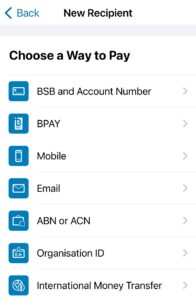
    Step 1: Log in to your internet banking or banking app on your phone and go to the area to “PAY SOMEONE”

    Step 2: Look for the option to use PayID (some examples below) . In this case choose ABN or ACN.
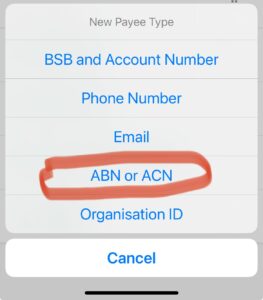
    Step 3: Enter Selah’s ABN 92112881320

    Step 4: It will confirm that you are paying Selah AU PTY LTD. So you know that your money is going to the right place!

    This might look slightly different for your bank but the method will be similar.

    If you need help, please call us on 03 9245 2131 or email [email protected]
    Filed Under: Tour Prep

    Physical preparation for a Selah tour

    May 31, 2023 by Lisa Tarzia

    Preparing yourself physically for your trip is an essential part of the overall experience, and its benefits will extend long after you return home. While walking may seem like a natural activity that you’re already capable of, our tours involve hours of continuous walking over several days, often while carrying a daypack. This is likely different from your usual walking routine.

    To ensure you have a fulfilling and enjoyable trip, we recommend “training” for at least three months leading up to your departure. Engaging in regular exercise before the trip will gradually improve your fitness levels, allowing you to fully embrace the journey with enthusiasm and energy to spare.

    Engaging in moderate activities like walking carries minimal health risks. However, before embarking on any new exercise program, especially if you have a medical condition, are over 40 years old, are overweight, or have been inactive for a significant period, we advise you to consult with your doctor for a check-up.

    In the beginning, you may find it challenging to get started, but after a few weeks, you will notice considerable improvements, which can be highly motivating.

    Here are some tips to get you started.

    • Plan a schedule and stick to it as closely as possible.
    • Track your progress. Download a recommended walking app, wear a pedometer or keep a journal.
    • Involve your family and friends on your longer walks or join a walking club.
    • Mix up your training activities so that you don’t get injured or bored.
    • Include other forms of exercise, such as swimming, bike riding, or the step machine at the gym.
    • Be mindful of what you eat

    As well as your training walks, try to build extra walking into each week. For example:

    • walk instead of driving to the local shops.
    • walk the dog, or your neighbour’s dog.
    • find a steep set of stairs and climb them several times.
    • if you catch a bus or train somewhere, get off one stop earlier and walk.

    Shoes, socks and blisters

    There’s a range of factors to consider when choosing your footwear. Ultimately, the answer to this will depend to an extent on where you are walking and when. Closed toes walking shoes are generally the best option as the toes are well protected and they cushion. Good grip on smooth worn cobblestones is also a must – just a drop of water can make them very slippery.

    If touring in the warmer months a lighter weight breathable shoe or outdoor trainer would serve you better. Conversely in the cooler months you’d want the warmth and protection provided by boots.

    Some of the popular brands of shoes include Merrell, Skechers, ECCO and Geox.

    Another important consideration is your socks – again you will have to adapt the choice of

    materials according to the season you walk in. Avoid cheap cotton socks & look for purpose-made hiking socks made with either synthetics or wool (merino is best). The synthetics tend to last longer than ordinary wool. You will perhaps see many socks that purport to be for hiking but can make your feet sweat like crazy – if in doubt choose a reputable brand who specialise in hiking/walking.

    The key to preventing blisters and avoiding unnecessary pain is to eliminate friction.

    Here’s a range of blister prevention strategies for you to test on your training walks.

    1. Buy comfortable, well-fitting walking shoes/boots
    2. Toughen up. Condition your feet by walking, gradually building intensity, pace and distance. Remember to moisturise your feet with a good quality foot cream after showering.
    3. Adjust your laces during your walk so that your shoes fit just right. Foot swelling and different temperatures and terrain will affect the fit of your footwear.
    4. Put cornflour or talcum powder in your socks to keep your feet dry.
    5. Keep your toenails short
    6. Apply tape (such as Fixomull) or dressings to reduce friction.
    7. Always carry blister pads in your daypack. The cushioned gel pad immediately reduces pain and promotes fast healing. You can even use them to prevent blisters.
    8. See a podiatrist if you think the way you walk might predispose you to blisters. You might need orthotics.

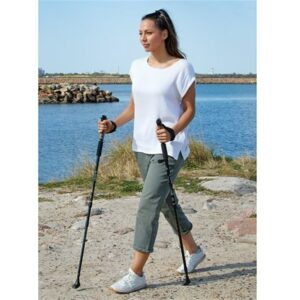
    Walking poles

    Walking poles lessen the pounding on your precious joints and can help reduce muscle soreness. They will give you a feeling of security

    and balance on cobblestones and can help prevent ankle and knee injury on steep ascents and descents. This allows you to more fully appreciate the views around you. They are also helpful if you get tired or injured.

    Walking poles can be beneficial if you have had issues with sore knees, ankles or hips, or are not used to walking with a backpack.

    Used correctly, trekking poles take up to 15% of the load from your lower body and redirect that load to your shoulders and upper arms, meaning there is a more even load distribution over your frame. This will significantly help your joints, especially over several days.


    Filed Under: Tour Prep

    Selah is
    accredited with

    SELAH
    HOME
    ABOUT US
    TRAVEL & TOURS
    RETREATS
    WORKSHOPS
    CONTACT US
    NEWSLETTER
    REGIONS
    Europe
    Israel, Palestine & Jordan
    Egypt
    Greece & Turkey
    POPULAR SEARCHES
    Christian Holidays
    Christian Pilgrimage
    Holy Land Tours
    Israel Tours
    Camino Walk Tours
    TRIP STYLE
    Family Friendly
    Fast Paced
    Relaxed Paced
    Unique Cultural Experiences
    Small Group
    With Retreat
    Soft Adventure
    Privacy Policy
    Terms and Conditions
    • ABOUT US
    • BLOG
    • TRIPS & TOURS
    • CONTACT US
    • YOUR FAVOURITES
    • TRAVEL ESSENTIALS
      • INSURANCE
      • TRAVEL MONEY
      • E-SIMS
      • Back
    • SELAH SEED

    Nomination Form

    Nominator Details

    Your Name
    (e.g. lecturer, pastor, mentor, supervisor, friend, colleague)

    Nominee Details

    Nominee’s full name
    (city/state/country)

    Ministry & Training Context

    (e.g. pastoral ministry, teaching, missions, youth, chaplaincy, leadership, theological education)

    Character, Calling & Readiness

    Impact & Multiplication

    (e.g. students, congregation, ministry team, classroom, future church)
    (teaching, preaching, mentoring, writing, curriculum, testimony, etc.)

    Practical Considerations

    Is the nominee aware of this nomination?
    Would the nominee be likely and able to travel in Oct-Nov 2026 if selected?
    (health, accessibility, visa considerations)

    Final Endorsement

    Consent statement:

    Want us to keep you in the loop?

    We're always planning exciting new tours, sharing Selah travel moments, inspiration and most importantly we love hearing about your own experiences.

    Stay in the loop through our newsletter and come and be apart of our Christian community on Facebook.

    SUBSCRIBE
    Selah Australia